Why Dogs Pull on the Leash & How to Fix It in Sacramento
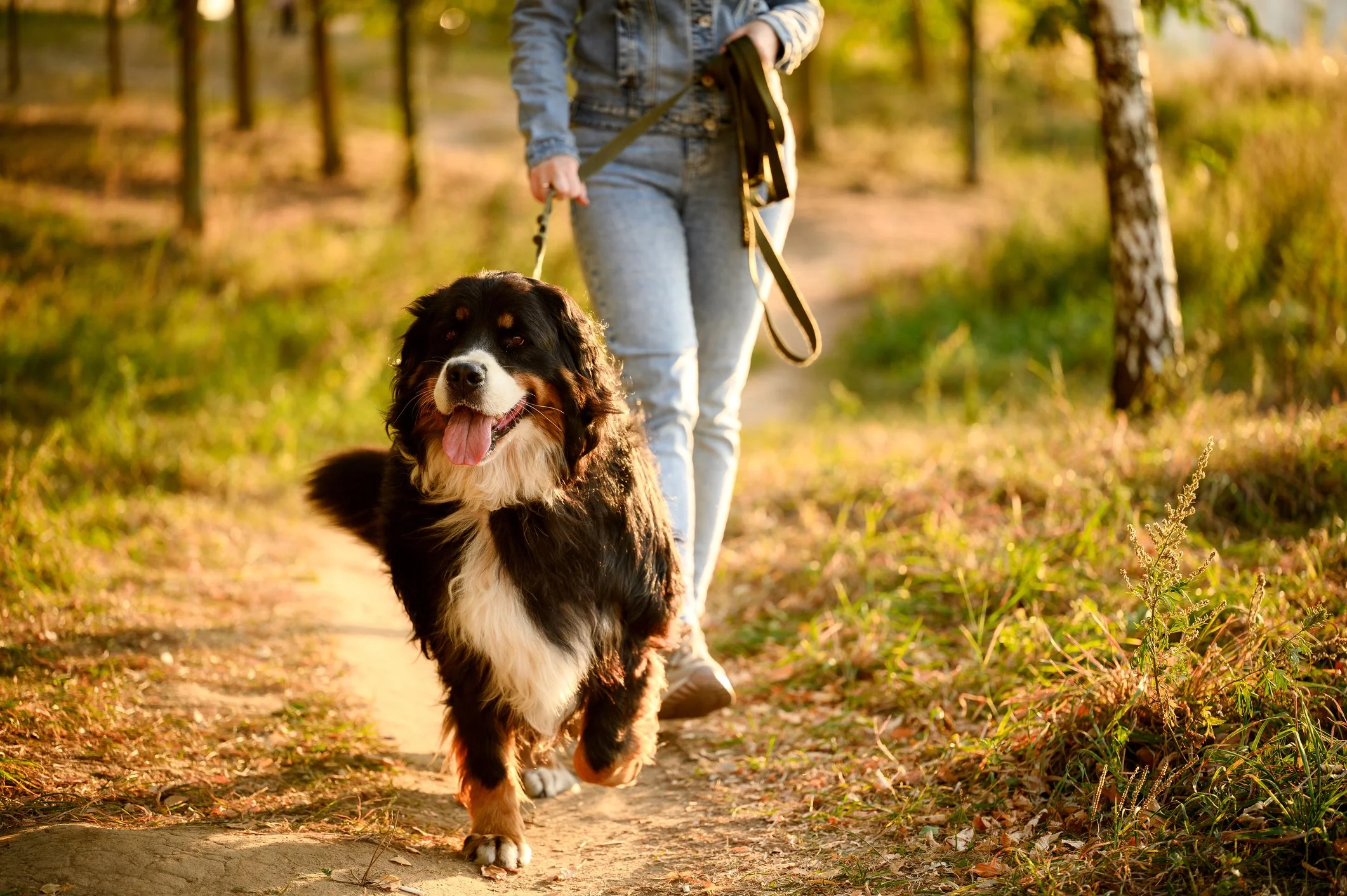
Your Dog Pulls on the Leash — Here's Why It Keeps Happening (And What Actually Fixes It)
Quick Takeaways
Leash pulling is a learned behavior, not a dominance issue — it can be untrained at any age
Dogs pull because it works: forward movement rewards them every time
Consistency is the single biggest factor in whether training sticks
Board-and-train programs get faster results because dogs practice continuously
Destination Canines uses balance training that works with your dog's instincts, not against them
If your dog has been pulling on the leash since the day you brought them home, you're not alone. Leash pulling is the most common behavior complaint Sacramento dog owners bring to trainers — and one of the most frustrating, because it makes every walk a battle instead of a break. The good news: it's one of the most solvable problems in dog training. The bad news: most approaches people try at home either don't work or stop working after a few days. Understanding why your dog pulls in the first place is the first step to fixing it for good.
Why does my dog pull on the leash every single walk?
Dogs pull because it gets them where they want to go. That's the simple, frustrating answer — and it's also the most important one. From your dog's perspective, pulling forward produces forward movement. That feedback loop is powerfully reinforcing. Every walk that ends with the dog having gotten where they wanted confirms the behavior. It isn't stubbornness, spite, or dominance — it's basic conditioning.Most dogs start pulling as puppies when owners are focused on completing the walk rather than teaching it. A 12-pound puppy that pulls is an inconvenience. An 80-pound adult dog that pulls is a safety issue. By the time owners seek professional dog training in Sacramento, the behavior is usually deeply ingrained — but that doesn't mean permanent.
What training methods actually work for leash pulling?
The approach matters enormously. Reward-only methods — offering treats for walking beside you — can work, but require extraordinary consistency and often plateau before a dog is reliable in real-world environments like Land Park, the American River Parkway, or a busy stretch of K Street.Destination Canines uses balance training: a combination of positive reinforcement for correct behavior and clear communication when the dog makes an incorrect choice. Founder Madison's approach treats dogs as dogs — not small humans — and meets them where they are behaviorally. Balance training produces faster, more durable results than reward-only approaches, particularly for high-drive dogs or dogs with established pulling histories. Madison's training methods are informed by her Master's in Ecology and years of hands-on experience with dogs of all breeds and backgrounds.
What's the difference between private lessons and board-and-train for leash pulling?
Private lessons for your dog in Sacramento put you in the training session alongside your dog, which is genuinely valuable. You learn the technique, understand the cues, and build a working relationship with your trainer. But results depend entirely on how consistently you practice between sessions. Most Sacramento dog owners have jobs, kids, and limited bandwidth. Inconsistent practice produces inconsistent results.Our board-and-train program for dogs is a great option for pet owners who want their dog to be fully immersed in their training. Your dog stays with a professional trainer and practices correct behavior dozens of times per day in a structured environment. By the time they come home, loose leash walking is a habit — not something they're still learning. We do recommend follow-up private lessons as part of every board-and-train program, so owners also learn how to maintain amazing results after pickup.
How long does it take to fix leash pulling with professional training?
For most dogs, meaningful progress shows up within the first week of a board-and-train program. Full reliability — walking on a loose leash past other dogs, squirrels, bikes, and joggers in a high-distraction environment — typically takes 2–4 weeks depending on the dog's age, drive level, and history.Private lessons tend to take longer because the practice is distributed over time. A series of 6 weekly sessions might produce solid results in low-distraction environments within 6–8 weeks, but real-world reliability often requires more.
What else can Sacramento dog owners address during training?
Leash pulling rarely exists in isolation. Dogs that pull are often also jumping on guests, lunging at other dogs on walks, or ignoring recall commands entirely. Our experienced dog trainer in Sacramento addresses the full picture — not just the leash. Board-and-train programs typically include sit, down, place, and off-leash recall alongside leash work, so owners come home with a dog that's genuinely pleasant to live with.
Insider Advice: The biggest mistake Sacramento dog owners make with leash pulling is switching training approaches too quickly. If a method isn't producing visible improvement after two consistent weeks, the issue usually isn't the method — it's how it's being applied. Working with a trainer who can diagnose what's specifically happening with your dog, rather than applying a generic protocol, is what separates results that stick from results that fade.
Schedule Your Visit
Destination Canines serves the Greater Sacramento area with board-and-train programs, private lessons, and specialty training. Contact Madison to discuss your dog's specific situation and find the right program.Phone: (916) 597-0101Web: destinationcanines.com
Frequently Asked Questions
Q: How do I stop my dog from pulling on the leash without treats?
A: The most effective long-term approach uses clear, consistent communication — both positive reinforcement for correct behavior and a clear signal when the dog makes the wrong choice. Balance training produces faster, more durable results than treat-only methods for most dogs, especially in high-distraction environments.
Q: What is board-and-train dog training in Sacramento?
A: Board-and-train means your dog stays with a professional trainer for a set period and works on specific skills every day. At Destination Canines, every board-and-train program includes private owner lessons, so you know how to maintain results after your dog comes home.
Q: Can older dogs be trained to stop pulling on the leash?
A: Yes. Age is not a limiting factor for leash training. Older dogs may have more ingrained habits, but they also tend to have lower energy and fewer distractions than young dogs. The training process may take slightly longer, but the results are just as durable.
Q: Is Destination Canines right for reactive or aggressive dogs?
A: Destination Canines works with a range of behavioral challenges, including dogs that lunge at other dogs or people on leash. Reactivity is addressed differently than simple pulling — contact Madison directly at (916) 597-0101 to discuss your dog's specific situation before booking.
Destination Canines | Sacramento, CA | (916) 597-0101 | destinationcanines.com